
Between a full-grain leather bag and a suede-coated leather bag, the difference in longevity is measured in years. Between a handmade belt and a glued belt, the gap in durability becomes apparent within the first few months. Choosing fashion accessories is first about assessing the tangible differences in materials, finishes, and durability before considering style.
Materials and finishes of accessories: what separates the durable from the disposable
The raw material determines the strength of an accessory far more than its initial appearance. A piece of jewelry made from raw brass tarnishes within weeks of contact with sweat, whereas a gold-plated alloy or stainless steel retains its shine for several seasons.
For leather goods, the difference between full-grain leather, corrected leather, and synthetic leather is evident in the structure of the material. Full-grain leather retains the outer layer of the dermis, which is the densest and most durable. Corrected leather has been sanded and coated to hide imperfections, which reduces its breathability and flexibility over time.
Finishes are just as important as the material itself. On a bag or a belt, checking the consistency of the stitching, the strength of the buckles, and the quality of the zippers allows one to anticipate the actual lifespan of the accessory. An uneven stitch or a loose thread indicates a poorly made product, even if sold at a high price.
To explore accessories on the Allure Mode website, this attention to manufacturing details remains the first filter to apply before any aesthetic consideration.
| Criterion | Entry-level accessory | Mid/high-end accessory |
|---|---|---|
| Bag material | Synthetic leather or coated corrected leather | Full-grain leather or vegetable-tanned leather |
| Jewelry (metal base) | Raw brass, untreated alloy | Stainless steel, gold-plated, 925 silver |
| Stitching | Glued or machine-stitched (thin thread) | Stitched with thick thread, reinforcements at stress points |
| Fastenings | Plastic zippers, fragile clips | Metal zippers (YKK or equivalent), screwed buckles |
| Estimated lifespan | Several months to a year | Several years with maintenance |
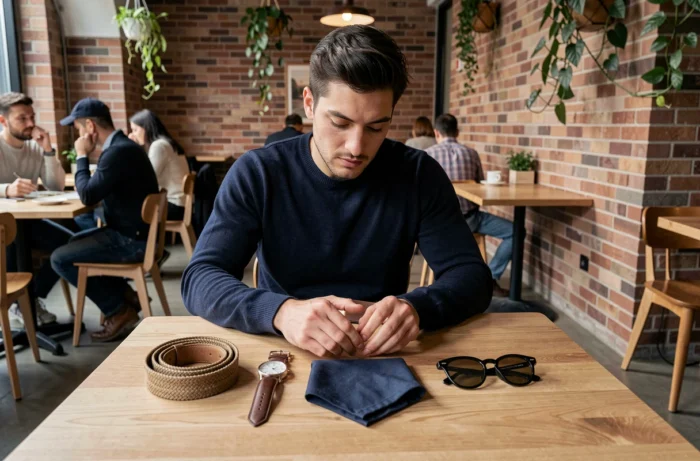
Repairability and lifecycle of a fashion accessory
The durability of an accessory is not limited to its initial strength. The ability to repair it radically changes its actual cost over time. A bag whose lining can be replaced or whose seams can be redone after two years of daily use is cheaper than a disposable model bought each season.
In France, the Repair Bonus can reduce the cost of certain repairs at a certified professional. This scheme covers several categories of everyday products and encourages prioritizing accessories designed to be maintained rather than replaced.
Specialized leather workshops also offer refurbishment services (replacement of straps, corner repairs, deep cleaning). Before buying a bag or a belt, checking if the brand offers after-sales service or directs to partner repairers is a concrete selection criterion.
European regulation on unsold items
The European regulation ESPR (EU 2024/1781), effective from July 18, 2024, sets sustainability requirements defined product by product. From July 19, 2026, large companies can no longer destroy certain unsold clothing, fashion accessories, and shoes, subject to exceptions.
This regulatory evolution pushes brands to rethink the design of their accessories. For consumers, it makes sense to look beyond just the purchase and consider repairability, maintenance, and the possibility of a second life.
Accessories and silhouette: adapting the choice to one’s morphology
The visual impact of an accessory depends on its proportion to the body. An overly large bag on a slender silhouette overwhelms the outfit. Conversely, a small bag carried by a tall person can appear disproportionate.
The same principles apply to jewelry and belts:
- Wide belt worn at the waist: it marks the separation between bust and hips and suits H or rectangle silhouettes, creating an illusion of curves
- Thin belt on a flowing dress: it structures without adding bulk, suitable for already defined waist shapes
- Choker on a V-neckline: it visually shortens the neck, to be avoided if the neck is short, to be favored on a long neck
- Crossbody bag: the horizontal line of the strap draws the eye to the height where it falls, which can visually widen the area concerned
Testing the accessory in front of a full-length mirror remains the most reliable method to assess the actual effect on the silhouette, far from catalog photos.
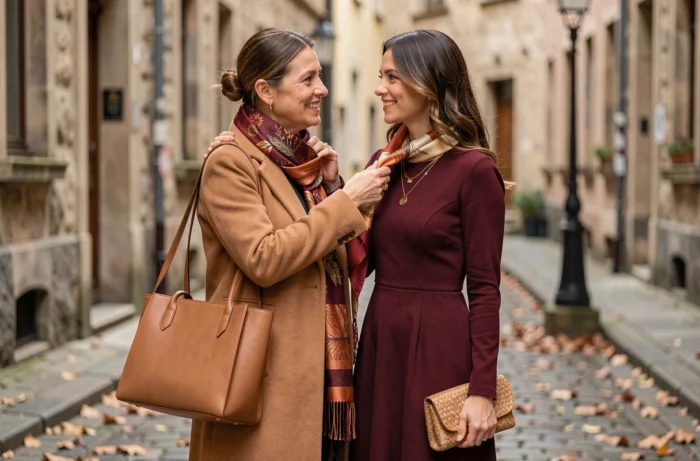
Colors and coherence of the look: associations that work
An accessory acts as a focal point in an outfit. Its color should either extend the palette of the garment or create a deliberate contrast. Mixing both approaches in the same look generally produces a messy effect.
Monochrome or controlled contrast
On a monochrome outfit (black, navy, beige), a single accessory in a bright color is enough to create a point of interest. Multiplying colors on accessories (red bag, yellow scarf, turquoise jewelry) fragments the gaze and disperses attention.
A strong-colored accessory works best when it is the only contrasting element in the outfit. This simple principle avoids most chromatic missteps.
Metals and coherence of jewelry
Mixing gold and silver in the same outfit divides opinions. In practice, coherence prevails: if the belt buckle is silver, jewelry in the same metallic tone unifies the look. Mixes work when they are intentional (bicolored jewelry designed for that), not when they result from random assembly.
- Warm skin undertone (greenish veins at the wrist): golden metals and brass harmonize better
- Cool undertone (bluish veins): silver, platinum, and stainless steel create less dissonance
- Neutral undertone: most metals are suitable, the choice is made according to the outfit
Personal colorimetry guides the choice of metals much more than seasonal trends. A piece of jewelry that matches the skin undertone appears natural, while the opposite creates a slight visible discord up close.
Choosing fashion accessories comes down to balancing material, proportion, and color. Trends come and go, but a well-constructed accessory, suited to one’s morphology and coherent with one’s personal palette remains relevant season after season. Repairability adds an additional criterion that increasingly weighs in the equation, both economically and regulatory-wise.