
Natural remedies for a lung infection do not replace antibiotic therapy or diagnostic assessment (chest X-ray, saturation, CRP). We position them as a comfort supplement under medical supervision, never as an etiological treatment. Any dyspnea, high fever, or chest pain requires urgent consultation before any self-medication steps.
Pharmacological limits of natural remedies against pneumonia
The active molecules in thyme (thymol, carvacrol) or eucalyptus (1,8-cineole) have documented antibacterial activity in vitro. Their plasma concentration after ingestion or inhalation remains far below the minimum inhibitory concentrations required to neutralize Streptococcus pneumoniae or Haemophilus influenzae in the lung parenchyma.
We regularly observe patients who delay their care by relying on herbal teas or essential oils. The risk of an acute bronchitis progressing to a frank lobar pneumonia significantly increases when the bacterial infection evolves without appropriate antibiotics for several days.
For those looking to understand how to treat a lung infection naturally, the answer lies in a nuance: these approaches reduce respiratory discomfort, thin secretions, and support immunity, but they do not eradicate the pathogen.
Thyme, eucalyptus, and honey: mechanisms of action on the respiratory tract
Thyme primarily acts through its expectorant effect. Thymol stimulates the ciliary beating of the bronchial epithelium, which accelerates mucociliary clearance. In infusion (one teaspoon of dried flowering tops per cup, three times a day), it alleviates productive cough without completely suppressing it, which remains desirable for the evacuation of infected mucus.
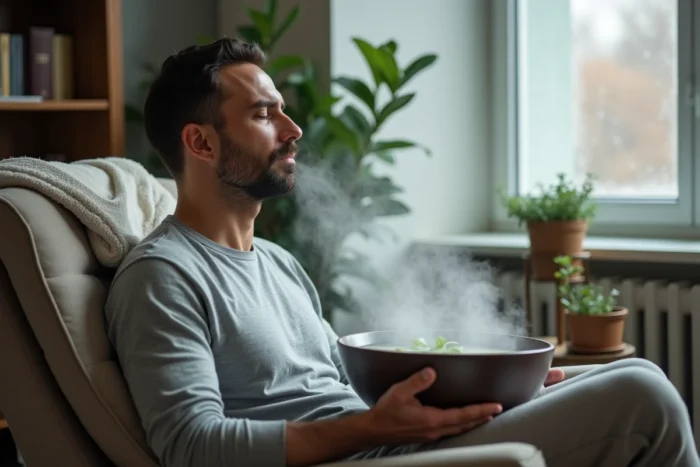
Radiated eucalyptus provides 1,8-cineole, a monoterpene with anti-inflammatory properties on the bronchial mucosa. Humid inhalation (a few leaves in a bowl of hot water, maximum ten minutes) remains the most relevant mode of administration. Atmospheric diffusion is not recommended for children, the elderly, and patients with confirmed lung infection, due to the risk of paradoxical bronchospasm.
Honey, particularly dark varieties rich in polyphenols, has a soothing effect on pharyngeal irritation and helps calm nighttime cough. Its antimicrobial activity (via hydrogen peroxide released by glucose oxidase) mainly concerns superficial ENT infections, not deep lung tissue.
Essential oils: non-negotiable precautions
Ravintsara essential oil (Cinnamomum camphora CT cineole) is often presented as a respiratory antiviral. When diluted and applied to the chest, it can help decongest. However, ingesting essential oils without a prescription from a trained healthcare professional exposes one to hepatotoxicity and digestive irritations.
We recommend never combining more than two essential oils in self-medication and prohibiting their use in pregnant women, children under six, and asthmatic patients.
Immune support and mucus management during a respiratory infection
Hydration remains the most underestimated lever. Sufficient liquid intake directly thins bronchial secretions, facilitating expectoration and reducing mucus stagnation in the bronchioles, a favorable ground for bacterial superinfection.
- Thyme or savory infusion, three to four cups per day, between meals, to combine hydration and expectorant effect.
- Hot broths rich in electrolytes, which compensate for fluid losses related to fever and maintain the fluidity of secretions.
- Humid inhalation morning and evening (eucalyptus or thyme), nose and mouth over the bowl, towel over the head, limiting the duration to ten minutes to avoid paradoxical drying of the mucous membranes.
Nasal washing with saline, often associated with colds, remains relevant in the case of lung infection. By clearing the upper airways, it reduces post-nasal drainage that fuels cough and maintains bronchial inflammation.
Targeted diet to support immune response
Foods rich in vitamin C (citrus fruits, bell peppers, kiwi) and zinc (pumpkin seeds, lentils) contribute to the normal functioning of immune cells. Their effect is not curative, but a deficiency in zinc or vitamin C slows the resolution of the infection.
Dairy products are not contraindicated. Contrary to a persistent belief, they do not increase bronchial mucus production. However, highly sugary foods promote an inflammatory terrain that does not aid recovery.

Warning signs that necessitate stopping self-treatment
Even with a well-conducted natural protocol, certain signals must trigger an immediate consultation. A persistent fever beyond three days, bloody cough, or low oxygen saturation fall outside the scope of home care.
- Shortness of breath at rest or progressively worsening dyspnea on exertion.
- Unilateral chest pain worsened by deep inspiration, suggestive of pleural involvement.
- Confusion or unusual drowsiness, especially in the elderly, a possible sign of hypoxia.
- Absence of symptom improvement after five days despite rest and hydration.
Patients with a history of COPD, severe asthma, or those in the post-COVID period are at increased risk of severe pneumonia. For these profiles, natural self-treatment without prior medical advice constitutes a potentially dangerous waste of time.
Natural remedies retain their place in the respiratory kit, provided they are confined to what they actually do: relieve cough, thin secretions, and maintain comfort during recovery. The treatment of the infection itself remains the responsibility of the physician and, when necessary, targeted antibiotic therapy.