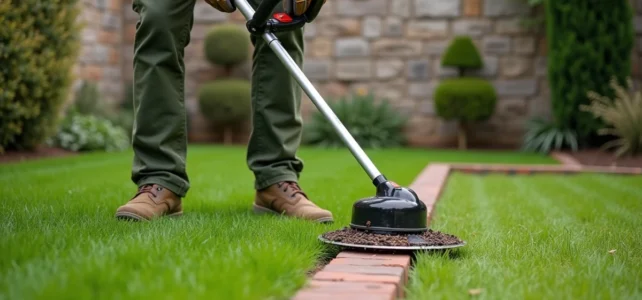
A thermal string trimmer is a finishing tool equipped with a gasoline engine (two-stroke or four-stroke) that drives a rotating cutting head mounted at the end of a handle. Its function: to cut grass where the mower cannot reach, along walls, around trees, at the foot of fences.
The choice of a thermal model rather than an electric one is justified by the need for power and autonomy on medium to large surfaces, but this choice requires understanding a few technical parameters before purchase.
Two-stroke or four-stroke engine: what the motorization changes
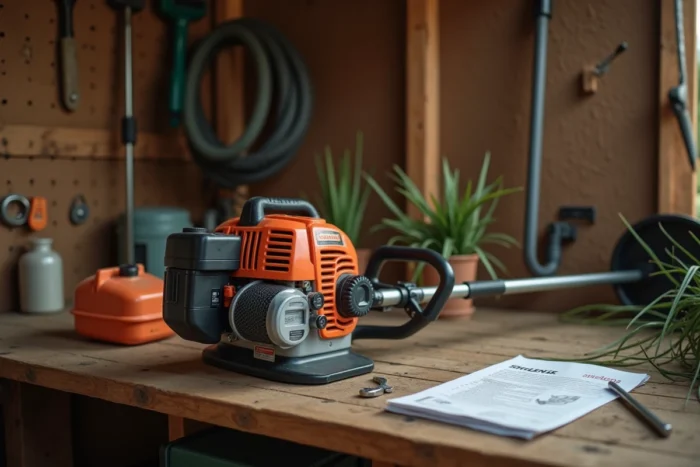
The distinction between a two-stroke engine and a four-stroke engine affects the weight, maintenance, and comfort of using the thermal string trimmer. A two-stroke engine operates with an oil-gasoline mixture poured directly into the tank. It is lighter, more responsive at startup, and cheaper to buy.
A four-stroke engine separates the oil circuit from the gasoline circuit, like in a car. The operation is quieter, vibrations are reduced, and fuel consumption decreases. In return, the device is heavier and its purchase price is higher.
For a medium-sized garden with regular borders, a two-stroke engine is more than sufficient. The four-stroke is justified on large areas where cutting sessions last a long time, as fatigue from noise and vibrations accumulates quickly. The comparisons available on coupebordurethermique.fr detail these differences model by model.
Cutting width and wire system: adapting the head to the terrain
The cutting head is the part that works. Two parameters define it: the cutting width and the type of wire installed.
The cutting width determines the area treated with each pass. On a thermal string trimmer, it generally varies from about twenty centimeters for entry-level models to over thirty centimeters on semi-professional versions. A larger width speeds up the work but reduces precision in tight spaces.
Round wire, serrated wire, or blade
Round nylon wire is suitable for fine grass and neat finishes. Serrated wire (square or star-shaped section) tackles thicker grasses and tough weeds. Some models also accept plastic or metal blades, bringing them closer to a small brush cutter.
- Round wire: suitable for maintained lawns, flowerbed borders, and tree bases on flat terrain
- Serrated wire: recommended for tall grasses, slopes, and areas around hedges overgrown with vegetation
- Plastic or metal blade: reserved for brambles, dense nettles, and fallow land, provided the engine offers enough power
The wire feeding mode also matters. A ground tap-and-go system allows new wire to be released by tapping the head against the ground during use. This mechanism avoids stopping the machine to manually rewind, saving valuable time on long border lengths.
Weight, harness, and ergonomics of a thermal string trimmer
A thermal string trimmer weighs significantly more than a wired or battery-powered electric model. The gasoline engine, full tank, and reinforced structure add weight. This weight is directly felt in the arms and shoulders after a few dozen minutes of use.
A carrying harness transforms the cutting experience by distributing the load across the chest and hips. Models delivered without a harness can be used for short sessions but become cumbersome beyond that. Checking for the presence of a harness (or its compatibility) is one of the criteria not to be overlooked.
The handle also plays a role. A D-handle offers good maneuverability for precise finishes. A bicycle-type handle stabilizes the device better for sweeping movements over large areas. The choice of handle depends on the dominant gesture: finishing around obstacles or mowing in straight lines.
Fire prevention and usage constraints during dry periods
Prefectures and departments remind every summer of the risks associated with using thermal tools near dry vegetation. A hot exhaust, a spark at the engine level, or contact between the cutting head and a stone can trigger a fire.
During dry periods, some communities restrict the use of thermal tools in high-risk areas, particularly along forests or scrubland. Forest fire prevention campaigns emphasize the legal responsibility of individuals in the event of a fire caused by gardening activities.
A few precautions reduce the risk:
- Avoid using the thermal string trimmer during the hottest hours and during dry spells
- Ensure that the exhaust is equipped with a functional spark arrestor
- Allow the machine to cool before storing it in a closed space
- Store fuel away from any heat source
Battery alternative for small gardens
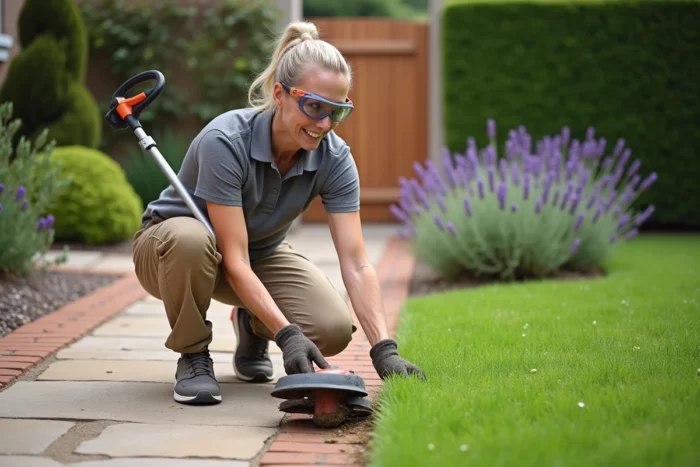
Battery-powered string trimmers in the professional range now offer cutting widths comparable to thermal ones, with heads that feed wire by tapping the ground. In a modest-sized garden, the battery meets the need without the constraints of noise, emissions, and fire risk. The thermal option remains relevant when battery autonomy is insufficient or when vegetation requires sustained power over time.
The thermal string trimmer retains its place in gardening tools for large areas or resilient vegetation. The key point to remember before purchase: to cross-reference motorization, cutting system, and ergonomics with the reality of one’s terrain, rather than relying solely on the displayed power.