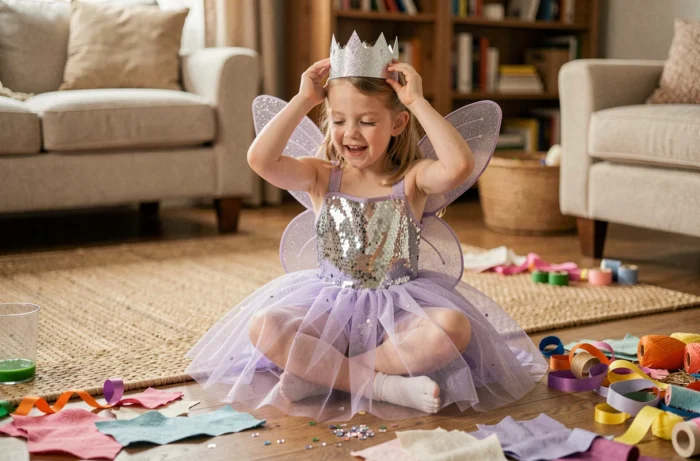
Clothing a child and keeping them occupied on a daily basis often involve two distinct budgets and mental loads. Parents juggle between rapidly changing wardrobes and activities that can capture attention without systematically resorting to screens. The French market for games and toys has recently shown a rebound in spending for those under twelve, after two years of decline.
Sensory Creative Kits: Why They Change the Game
Ready-to-use sensory DIY kits are gaining ground in French households: slime kits, homemade playdough, multisensory boxes. This category has seen significant growth in France since 2024, driven by the trend of “Inspiring Inventors” toys that combine creativity with the STEAM approach (science, technology, engineering, art, mathematics).
The appeal of these kits lies in their calibrated format. A five-year-old can follow the steps alone or almost alone, freeing up parental time. The tangible result (an object, a texture, a color) enhances the feeling of accomplishment, whereas an overly open-ended activity can frustrate younger children.
Brands like jolis-momes.fr also offer clothing and accessories designed for children’s daily lives, allowing for a combination of practical outfit searches and a desire for creativity in a single shopping journey.
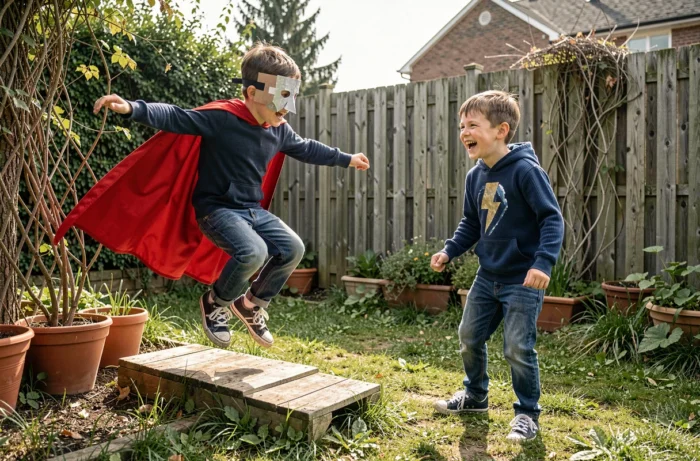
Children’s Clothing and Messy Activities: Choosing Suitable Fabrics
Talking about creative activities without mentioning the mess on clothing would ignore a real constraint. Paint, salt dough, plant ink: each workshop leaves its mark. The choice of fabric determines the child’s freedom to create.
Two approaches coexist among families. The first involves reserving clothing dedicated to crafting, often pieces too stained to be worn outside. The second, more thoughtful approach, prioritizes durable materials that can withstand frequent washing and friction from the outset.
Concrete Criteria for Clothing Compatible with Children’s Crafting
- Thick cotton fibers or a cotton-polyester blend that can withstand high washing temperatures without losing shape.
- Dark colors or busy patterns that better mask residual stains than a plain light fabric.
- Loose cuts at the sleeves and collar, allowing for easy donning and removal of an apron or smock.
This purchasing logic reduces textile waste. A garment designed to withstand manual activities lasts several seasons, which offsets a sometimes higher unit price.
Salt Dough, Paper, Water: Three Basic Materials for Screen-Free Activities
SEO guides in the sector revolve around the same keywords: salt dough, paper, water, homemade crafting. This is no coincidence. These three materials cover the majority of activities that can be done without additional purchases.
Salt Dough: Beyond the Classic Recipe
Mixing flour, salt, and water remains the most accessible entry point. Baking and storage often make the difference between a lasting object and a disappointing result. Poorly dried salt dough (too hot an oven, uneven thickness) cracks within days. Allowing it to air dry for 48 hours before baking at a low temperature yields significantly sturdier results.
Adding food coloring to the dough before modeling, rather than painting after baking, simplifies the process for children under six. The result is more uniform, and the painting activity disappears, shortening the overall duration of the workshop.
Paper: From Coloring to Construction
Paper is not limited to drawing. Folding, cutting, gluing: these actions develop fine motor skills just as much as a commercial sensory kit. A roll of kraft paper purchased at a supermarket provides several weeks of activities, from floor coloring to making masks or models.
Paper activities work better with a constraint: an imposed theme, a limited format, a restricted number of colors. Total freedom (“draw whatever you want”) often leads to quick disengagement among children aged four to eight.
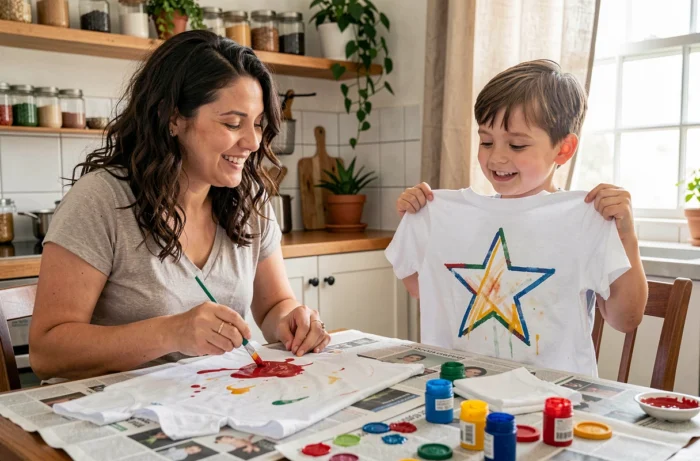
Screen Time and Free Play: What Recent Studies Nuance
The issue of screens permeates all reflections on children’s activities. A longitudinal study spanning eight years, reported by several media outlets, provides results that nuance the prevailing discourse. The impact of screen time on cognitive development varies depending on the type of content and the context of use.
Some early childhood professionals observe vocabulary benefits when screen time is accompanied by an adult, while passive and solitary use remains associated with less favorable effects.
This observation does not disqualify manual activities. However, it invites us to move beyond the binary opposition of screen versus crafting. A child alternating between a salt dough workshop in the morning and a guided drawing app in the afternoon does not necessarily experience an imbalance.
Family Budget: Balancing Between Clothing, Toys, and DIY Activities
The rebound in spending for those under twelve indicates that families are reinvesting in games and toys after a period of restriction. Creative kits, collectible sets, and STEAM toys are capturing an increasing share of this budget.
- A complete sensory kit generally costs less than an electronic toy, for a comparable duration of use.
- Activities based on recycled materials (rolls, boxes, fabric) have almost no cost but require more parental time.
- Combining durable clothing and low-cost activities helps reduce the overall budget while maintaining a variety of engagements.
The balance also depends on age. Before six, free activities with simple materials are effective. After six, structured kits and STEAM projects take over, providing visible progress that maintains motivation.
Suitable fabric, basic materials in stock, one or two sensory kits in reserve: this combination covers most situations without multiplying impulsive purchases.