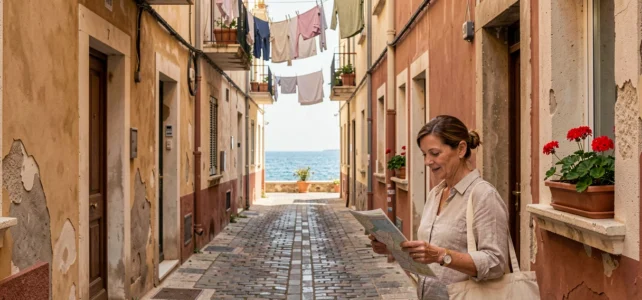
The Panier, the oldest district of Marseille, is nestled between the Vieux-Port and the Cathedral of La Major. It attracts a considerable flow of tourists each year, despite a persistent reputation as a risky neighborhood found on travel forums. So, should we really fear its narrow streets, or is this image a distortion shaped by the city’s overall reputation?
What field reports say about safety in the Panier
Visitor reviews published on travel platforms paint a more nuanced picture than the rumors suggest. The vast majority of testimonials describe the Panier as a pleasant neighborhood to explore during the day, with its colorful facades, artists’ workshops, and small shaded squares around the Place des Moulins or the Place de Lenche.
Negative reports focus on a specific type of inconvenience: pickpocketing targets distracted tourists, particularly those who photograph the streets without watching their belongings. This phenomenon is not unique to the Panier. It can be found in most historic neighborhoods with high tourist traffic in the Mediterranean.
Several recent sources argue that the Panier district in Marseille being dangerous is more of a cliché than a daily reality for attentive visitors. The Marseille Tourist Office actually presents the Panier as a heritage neighborhood worth visiting, which would contradict the notion of a truly hostile area.
The evening perception remains the main point of divergence in the testimonials. When businesses close and the streets empty, the atmosphere changes. Some visitors describe discomfort related to isolation rather than a concrete threat. Others mention persistent solicitations. The distinction between real insecurity and the feeling of insecurity is crucial here.
Panier versus northern neighborhoods of Marseille: where does the real risk lie
Comparing the Panier to the truly sensitive areas of Marseille puts things into perspective. The northern neighborhoods concentrate the majority of serious violence incidents, linked to drug trafficking in residential areas far from tourist circuits. Travel guides and local sources identify specific zones (certain housing projects in the 13th, 14th, 15th, and 16th arrondissements) as requiring significantly greater vigilance.
The Panier, located in the 2nd arrondissement, belongs to the historical heart of the city. Its risk profile is similar to that of other tourist areas in the center: Noailles, Belsunce, or the vicinity of the Saint-Charles train station, where petty theft occasionally targets isolated passersby in the evening.
The Panier is not among the most problematic areas of Marseille. Visitors who avoid it out of fear miss out on remarkable architectural heritage, from the Vieille Charité to the museum of Roman Docks, without any real gain in terms of safety. The risk can be managed; it does not justify avoidance.
Visiting the Panier: time slots and habits that change the experience
The timing of the visit significantly alters the perception. In the morning and early afternoon, the neighborhood is vibrant: markets, café terraces around the Accoules, visitors in the galleries. The human density itself constitutes a factor of passive safety.
In contrast, after nightfall, some narrow streets between the Place des Moulins and the Montée des Accoules become almost deserted. It is during this time that the few reported incidents occur. A few habits significantly reduce exposure:
- Favor well-lit main roads for nighttime movements, heading to the Vieux-Port via Rue de la République rather than through the inner alleys
- Carry your bag crossbody in front of you and avoid leaving a phone sticking out of a back pocket, especially in narrow, crowded passages
- Visit in small groups rather than solo if you plan to linger at the end of the day, as solicitations primarily target isolated individuals
The comfort of the visit may deteriorate without personal safety being at stake. The occasional dirtiness of some streets, odors, noise: these elements contribute to a feeling of insecurity that has no direct link to the risk of aggression. Making this distinction allows one to enjoy the neighborhood without disproportionate anxiety.
The Panier in the evening: an atmosphere, not a threat
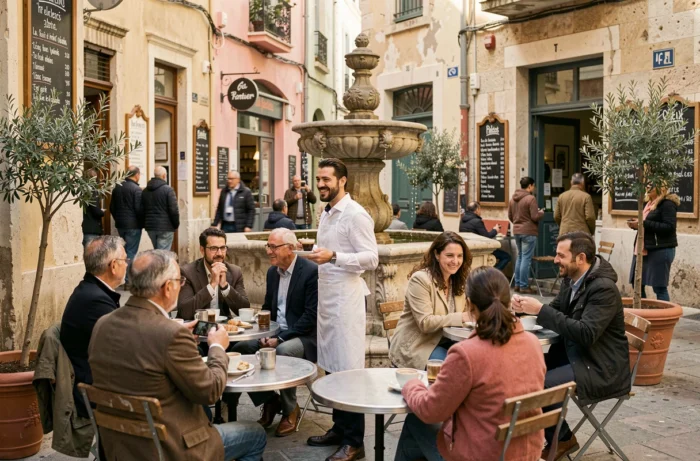
Several restaurants and bars around the Place de Lenche remain open in the evening and attract a mixed local clientele. These points of nighttime activity create pockets of life that secure movements nearby. The neighborhood does not turn into a hostile zone at night; it simply becomes quieter, and this calm can be disorienting in a city with a noisy reputation.
Gentrification of the Panier and evolution of safety in Marseille
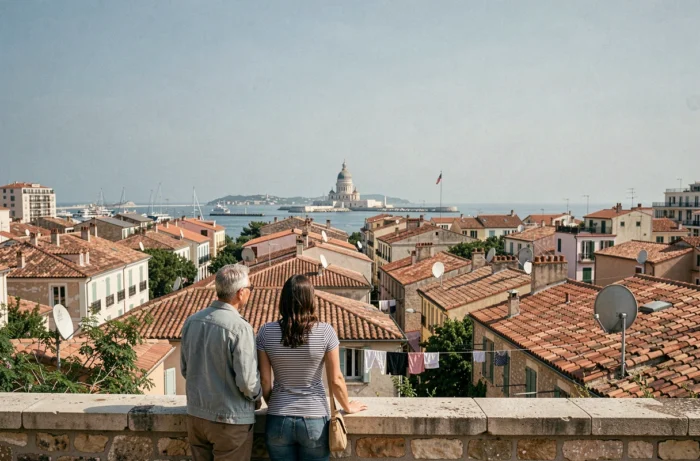
The Panier has changed significantly since the 2000s. The gradual establishment of art galleries, designer shops, and guesthouses has altered the neighborhood’s sociology. Gentrification has reduced certain forms of delinquency while creating tensions between long-time residents and newcomers.
This transformation partly explains the gap between the historical reputation of the Panier and the current reality. Alarmist narratives often rely on experiences from several years or even decades ago, when the neighborhood was indeed more degraded.
The available data do not allow for a conclusion of a total disappearance of petty crime. The neighborhood remains popular, vibrant, and social inequalities are visible. This diversity is part of its identity. However, it does not make it a dangerous place for an informed visitor.
The Panier deserves a visit without excessive apprehension. A lively historic neighborhood always carries a degree of unpredictability, but the real risk for an attentive visitor remains that of opportunistic petty crime, comparable to what one finds in any Mediterranean tourist city center. The usual precautions of any urban traveler are sufficient to fully enjoy the neighborhood.